
Indigo Dyed Textiles
Dip, Breathe. Repeat.
Shibori is a traditional Japanese resist-dyeing discipline where cloth is folded, bound, clamped, or stitched to prevent dye from penetrating specific areas, revealing striking geometric patterns when unfolded. The works in this collection showcase several distinct traditional methods: arashi (storm / pole-wrapped shibori), itajime (shape-folded and clamped resist), and kanoko (bound ring shibori), alongside katazome, an ancient technique using a hand-cut stencil and rice-paste resist.
Crafted both during immersive dye workshops and in my studio indigo vat, each piece reflects an ongoing exploration of depth, nuance, and indigo chemistry. The creative possibilities are endless—guided by the scale of the folds, the balance of negative space, and the repetition of the vat immersion process. Achieving the deepest, authentic indigo blues requires 10 to 12 individual dips, allowing 15 to 30 minutes of oxidation between each bath as the indigo pigment transforms from yellow-green to dark navy upon exposure to air. These resist-dye techniques are often layered—such as pole-wrapping a textile before clamping—to capture subtle gradient effects, such as the soft glow of a rising moon.
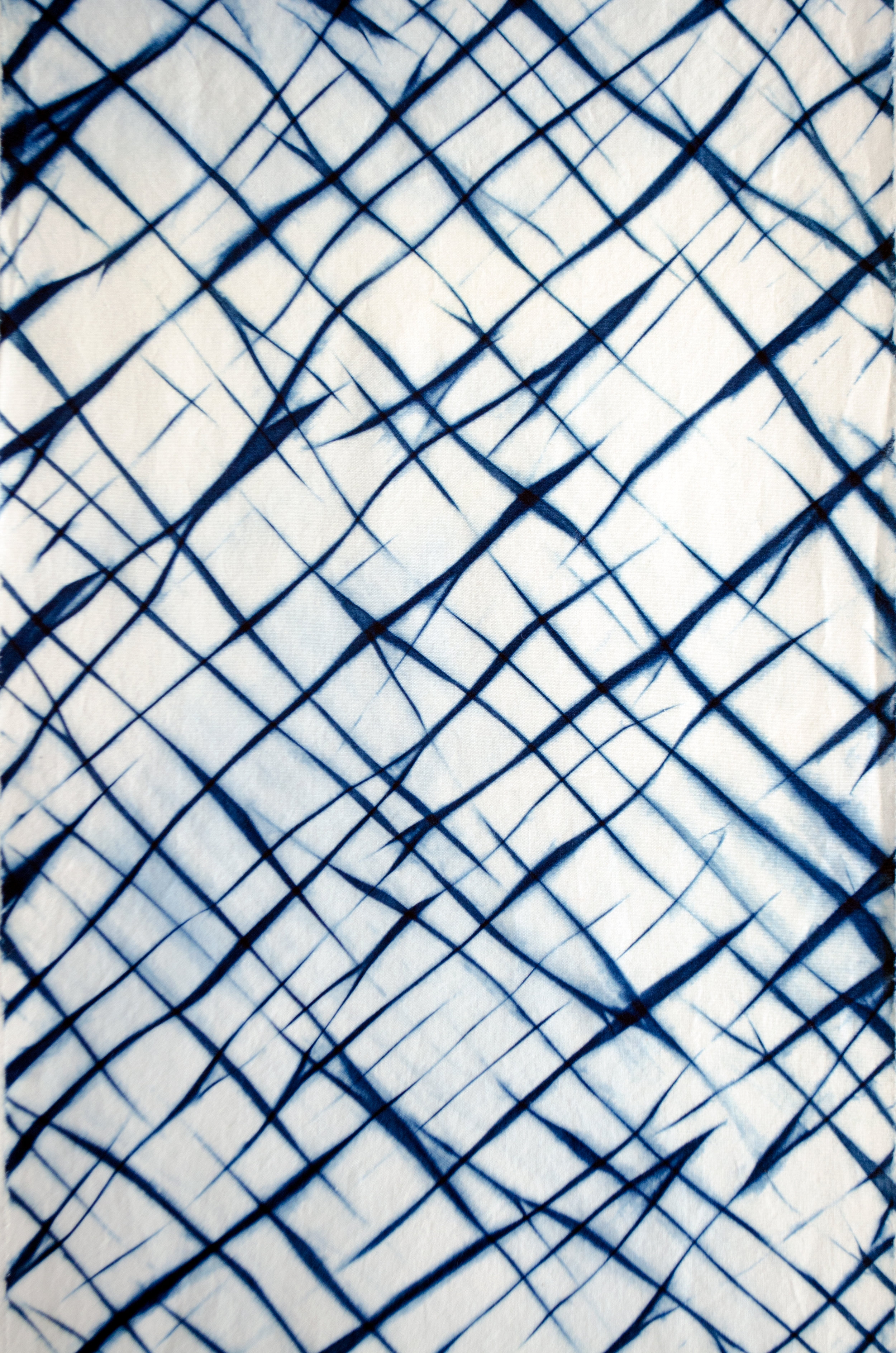
Arashi Shibori Cross-Hatch Grid on Cotton Arashi (pole-wrapped) shibori resist-dye technique on cotton fabric. The textile was tightly bound around a cylinder, dyed in a natural indigo vat, dried, and re-wrapped in the opposing direction before a second immersion bath. This double-dip technique allows natural indigo dye to penetrate only the compressed outer folds, creating crisp, intersecting dark indigo line patterns over a clean white reserve. Handcrafted by Carlyn Clark.
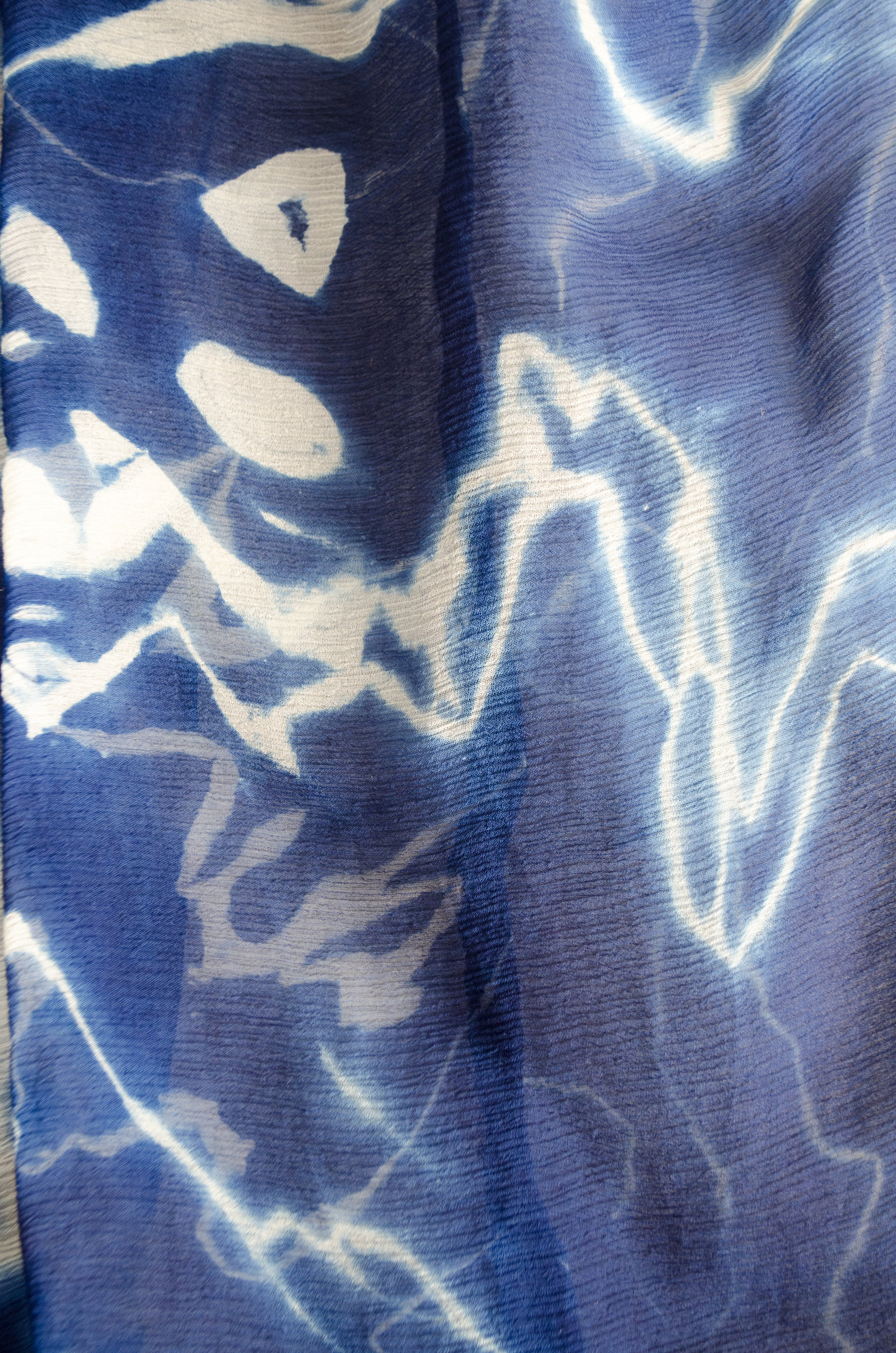
Arashi Shibori Organic Waves on Silk Chiffon Arashi (pole-wrapped) shibori resist-dyeing on lightweight silk chiffon fabric. The sheer silk was diagonally wrapped around a core cylinder, tightly bound with cord, and scrunched tightly before immersion in a natural indigo dye vat. The compressed pleats create soft, flowing zigzag wave patterns with organic gradients of sky blue, deep indigo, and white reserve lines. Hand-dyed by Carlyn Clark.
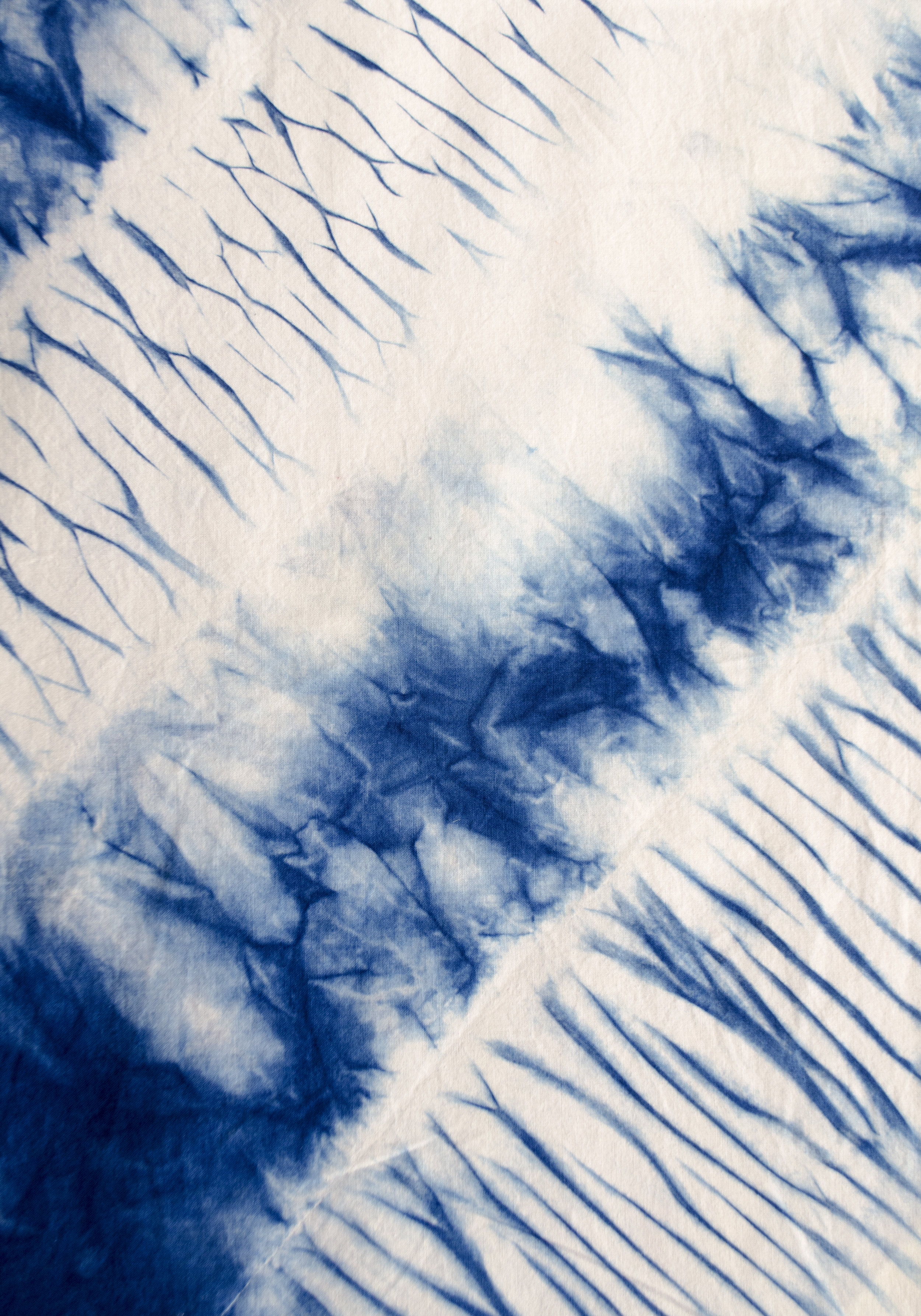
Arashi Shibori Variable-Tension Diagonal Band on Cotton Arashi (pole-wrapped) shibori resist technique on woven cotton fabric. Wrapped diagonally on a wide-diameter cylinder, the textile features varied binding tension across the pole: tightly compressed sections form crisp, fine-line reserves, while loosely bound areas allow natural indigo dye to seep inward, creating a soft, feathered diagonal band with rich tonal gradients. Hand-dyed in a natural indigo vat by Carlyn Clark.
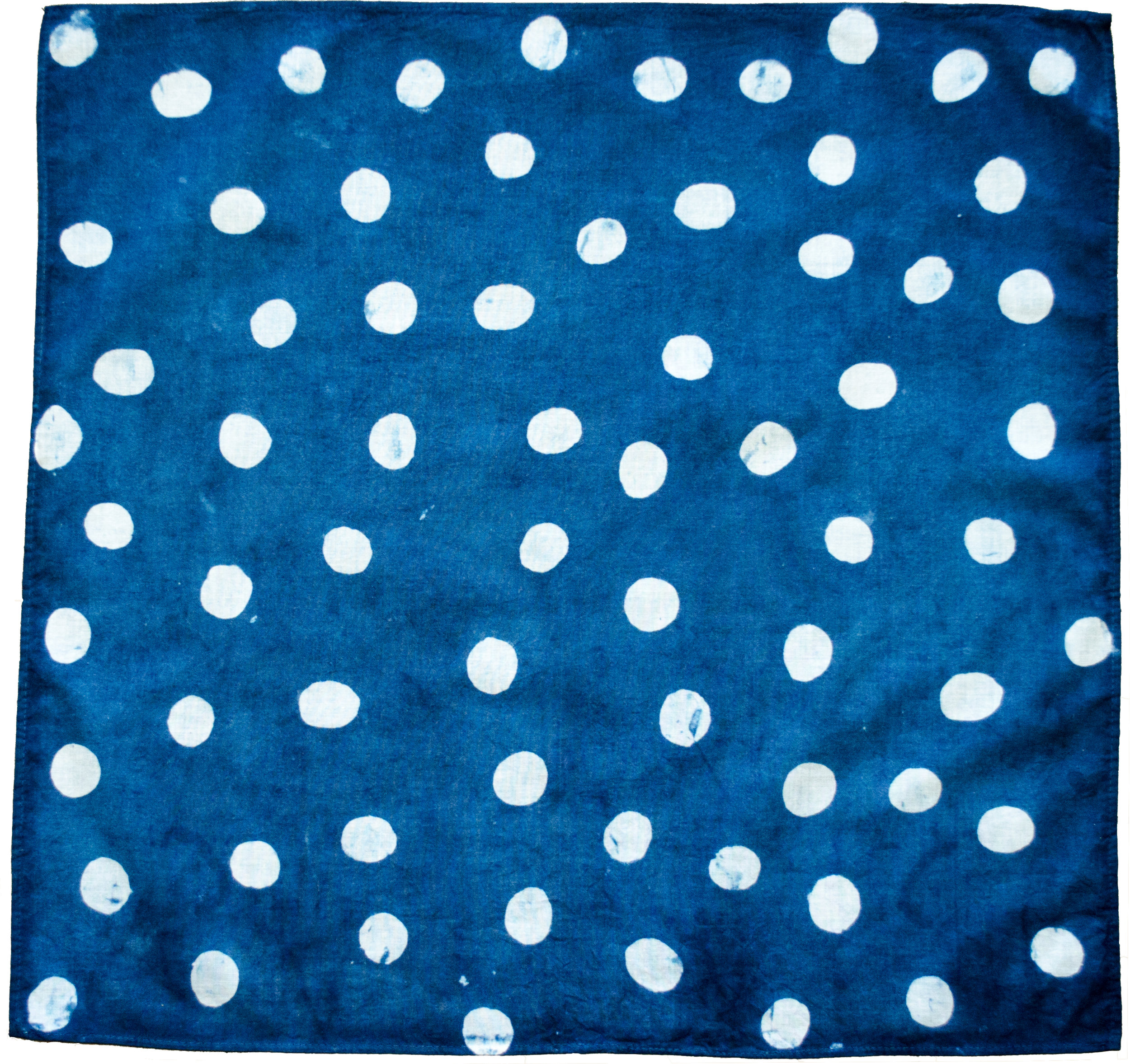
Katazome Indigo Polka Dot Cotton Bandana Hand-dyed cotton bandana featuring a classic polka dot pattern created using traditional Japanese katazome stencil dyeing. A rice-paste resist (nori-zoken) was applied through a hand-cut stencil onto raw cotton before multiple dip immersions in a natural indigo vat. Once oxidized to a deep indigo blue, the dried paste was washed away, leaving clean white dot reserves across the textile. Handcrafted by Carlyn Clark.
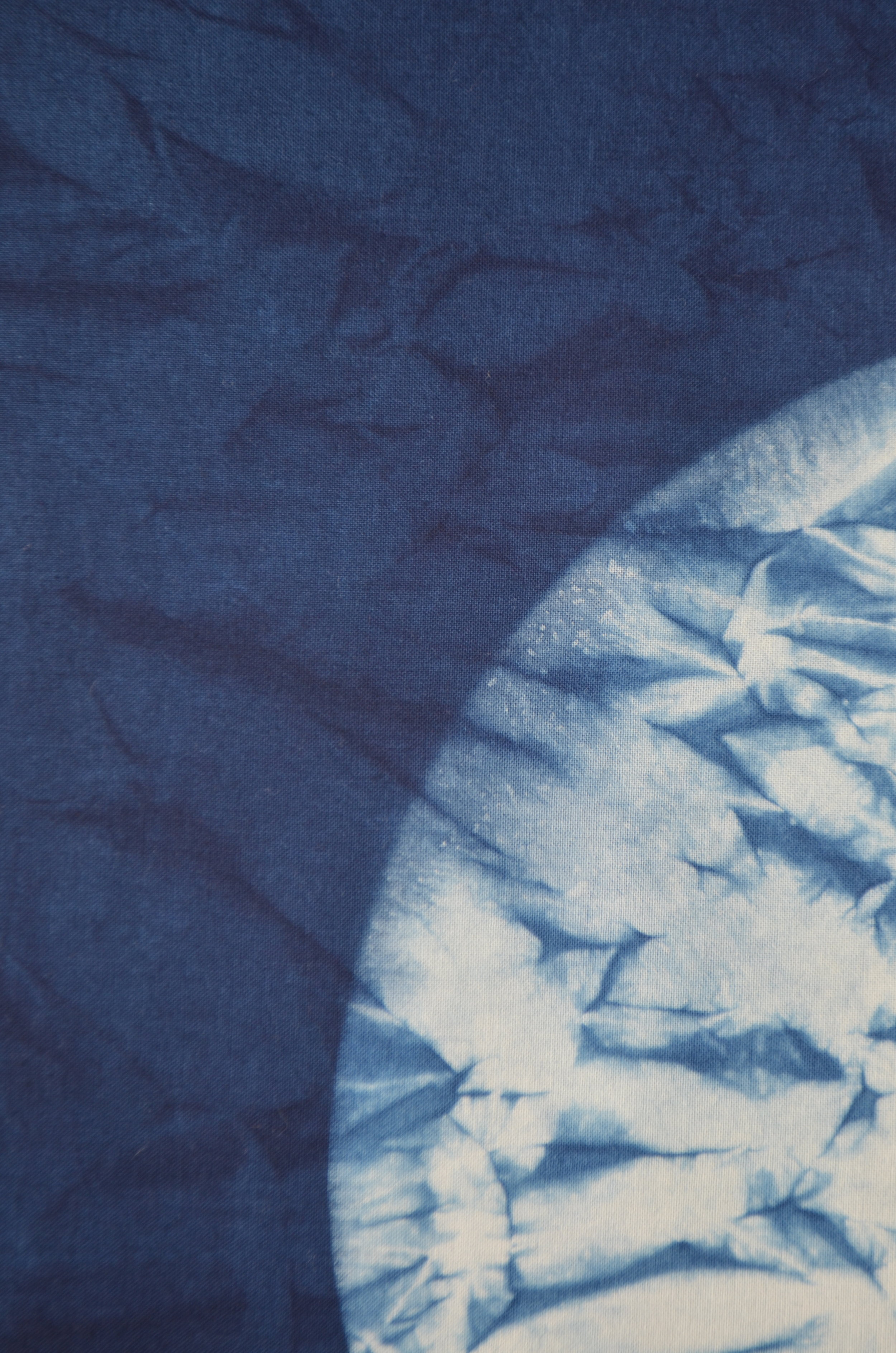
Arashi & Itajime Shibori Full Moon Motif in Indigo Combined arashi (pole-wrapped) and itajime (shape-clamped) shibori resist-dyeing on natural textile. The fabric was first bound around a pole to build an underlying textured indigo ground, then folded and clamped between curved acrylic or wooden blocks prior to repeated immersion dips in a natural indigo vat. The clamped resist protects the inner folds, creating a sharp circular crescent motif reminiscent of a full moon rising over a dark indigo night sky. Handcrafted by Carlyn Clark.
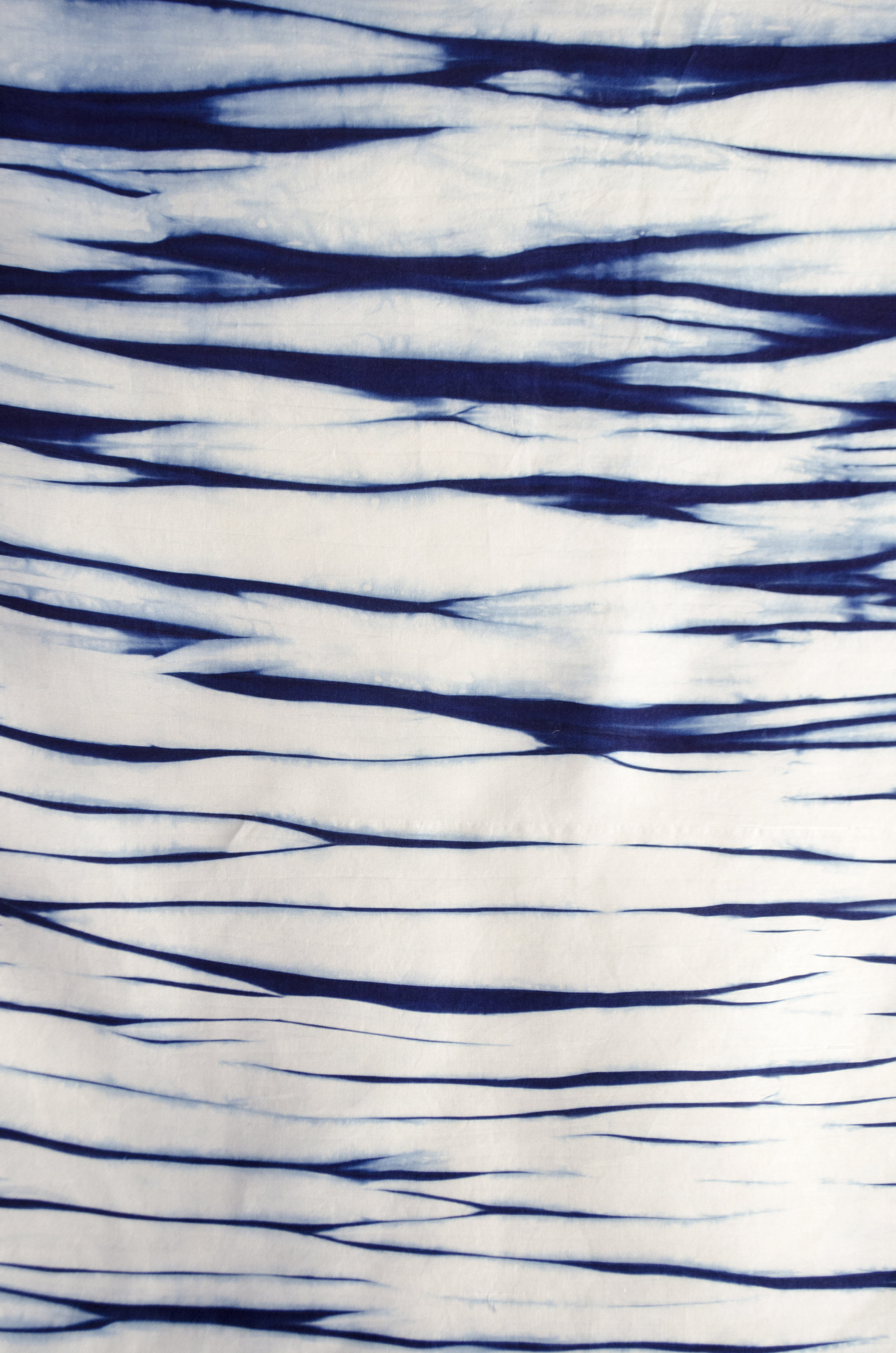
Arashi Shibori Horizontal Streaks on Upcycled Vintage Linen Upcycled vintage linen tablecloth transformed using horizontal arashi (pole-wrapped) shibori resist-dyeing. The heavy linen textile was wrapped lengthwise around a cylinder, compressed tightly along its axis, and bound before immersion into a fermented natural indigo vat. The process leaves long, fluid horizontal streaks of rich indigo blue against broad cream-white linen reserves, highlighting the slubbed texture of reclaimed vintage fibers. Hand-dyed by Carlyn Clark.
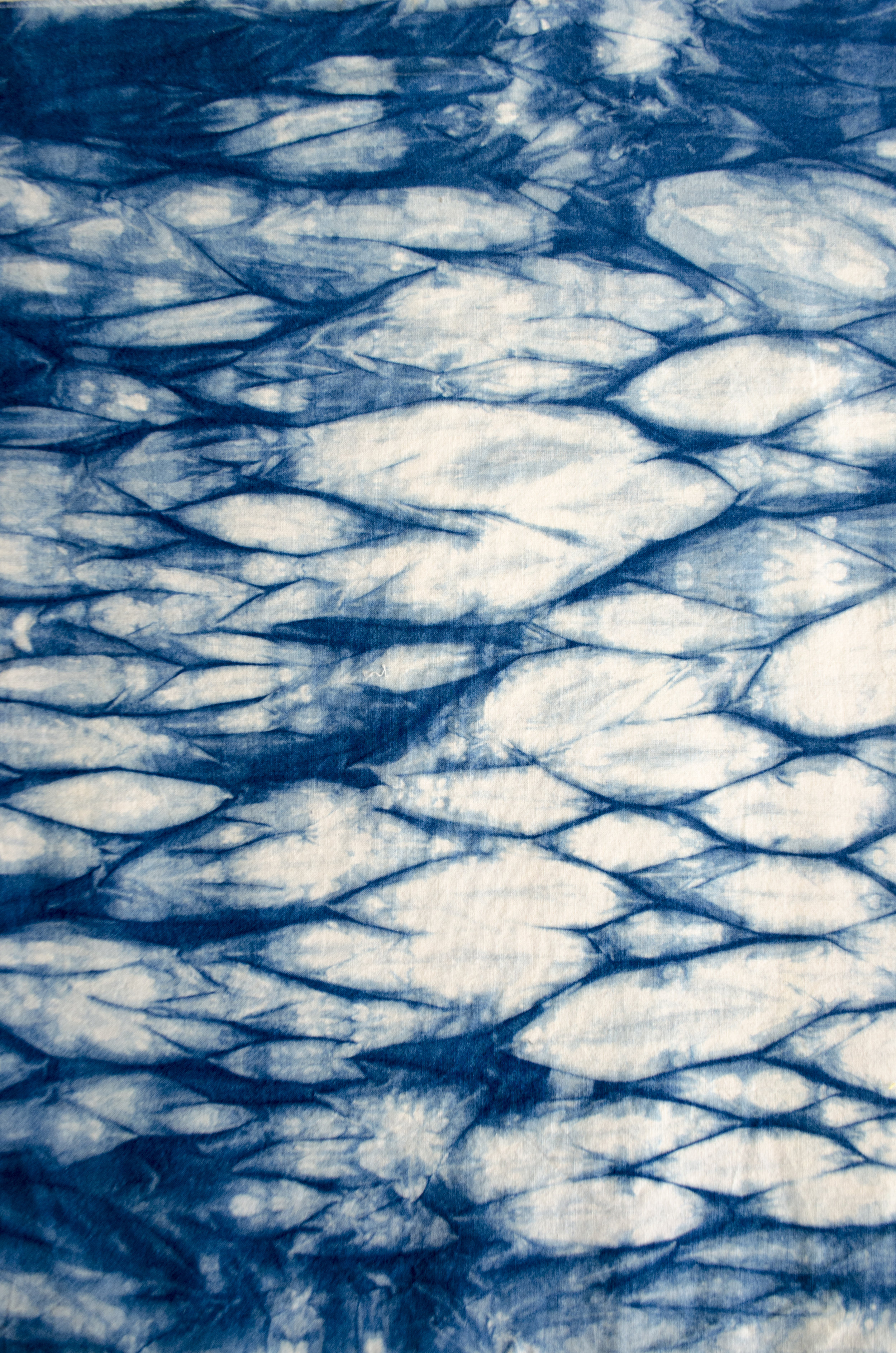
Loose-Wrap Arashi Shibori Feathered Waves on Cotton Arashi (pole-wrapped) shibori resist technique executed on cotton fabric using intentionally loose binding tension. In contrast to high-compression wraps, the relaxed binding allowed natural indigo dye to seep deeply beneath the folds during vat immersion. This low-tension technique produces soft, expansive, leaf-like reserves and feathered wave gradients rather than hard-edged lines. Hand-dyed by Carlyn Clark.
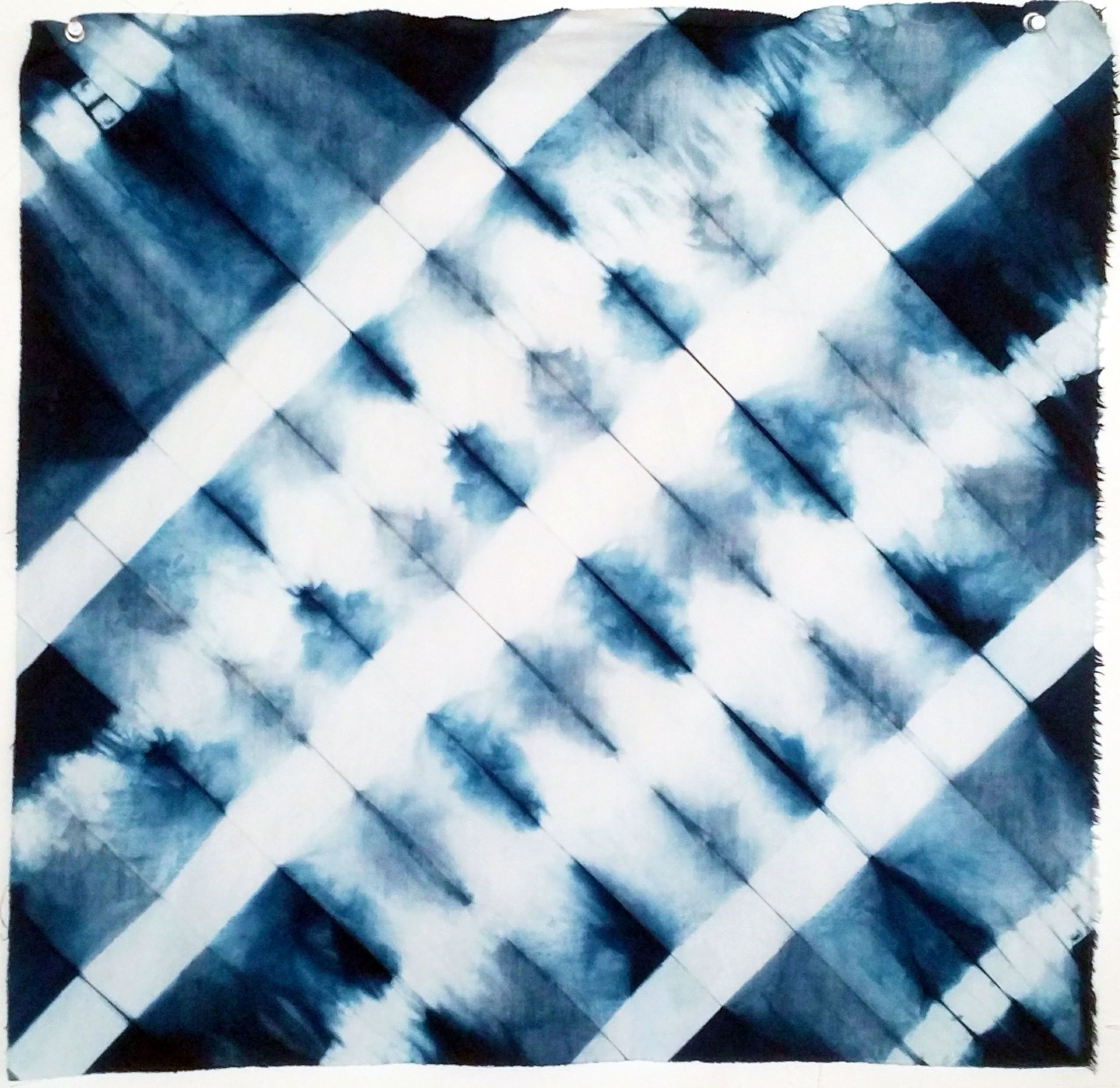
Itajime Shibori Geometric Plaid & Grid Motif Traditional itajime (shape-clamped) shibori resist-dyeing on woven fabric. The textile was accordion-folded along precise diagonal axes and tightly clamped between geometric resist blocks before immersion into a natural indigo vat. The pressure from the clamps prevents dye penetration in the interior folds, creating clean white cross-bands and feathered indigo gradients where the dye wicked into the exposed edges. Handcrafted by Carlyn Clark.
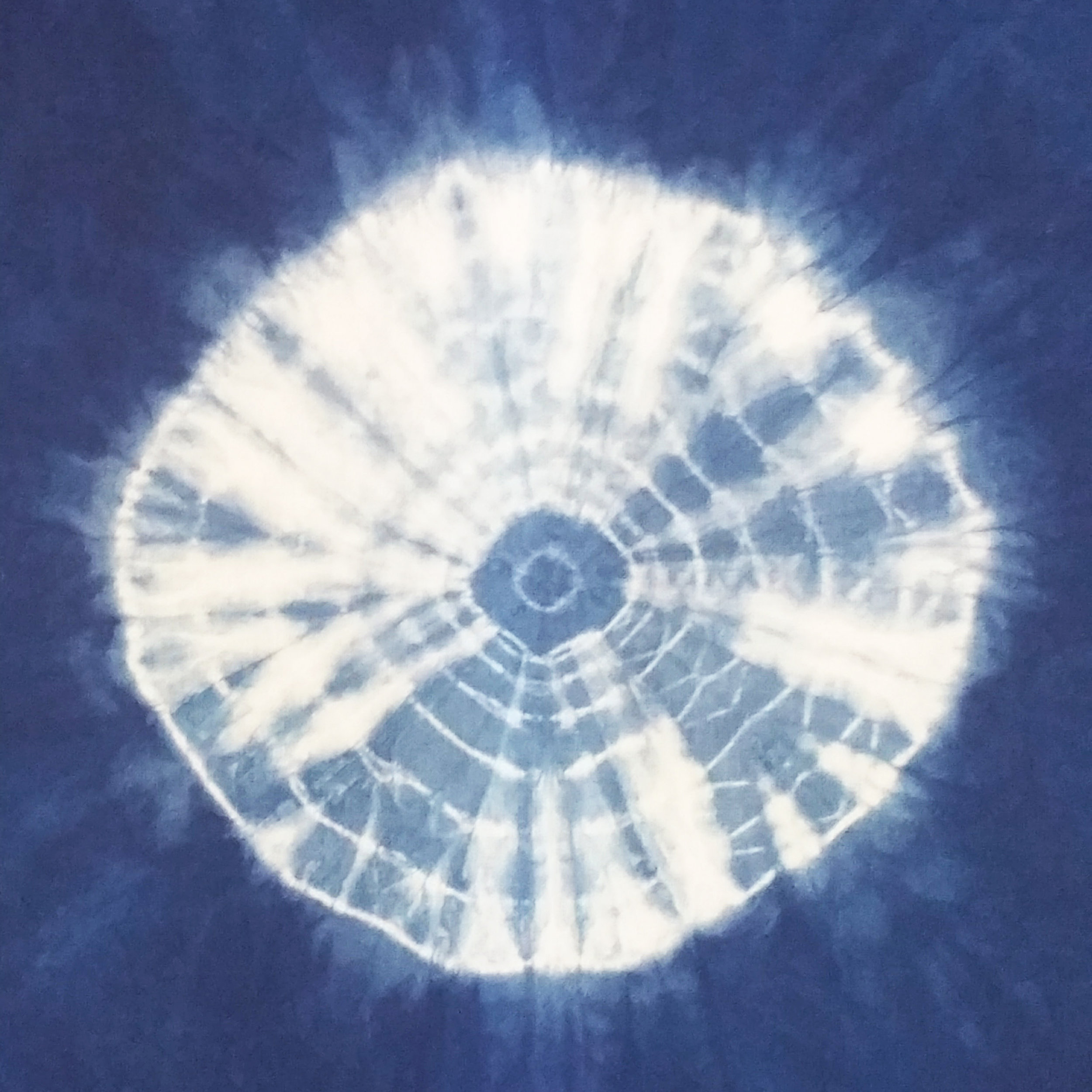
Kumo Shibori Radial Web & Mandala Motif in Indigo Kumo (spiderweb) bound-resist shibori technique on natural woven cotton. The textile was gathered into a central point, pleated radially, and bound spirally with high-tension thread from the center outward prior to dipping in a natural indigo vat. The tightly wound thread creates fine concentric ring resists and radiating white spokes against a deep, rich indigo background field. Handcrafted by Carlyn Clark.
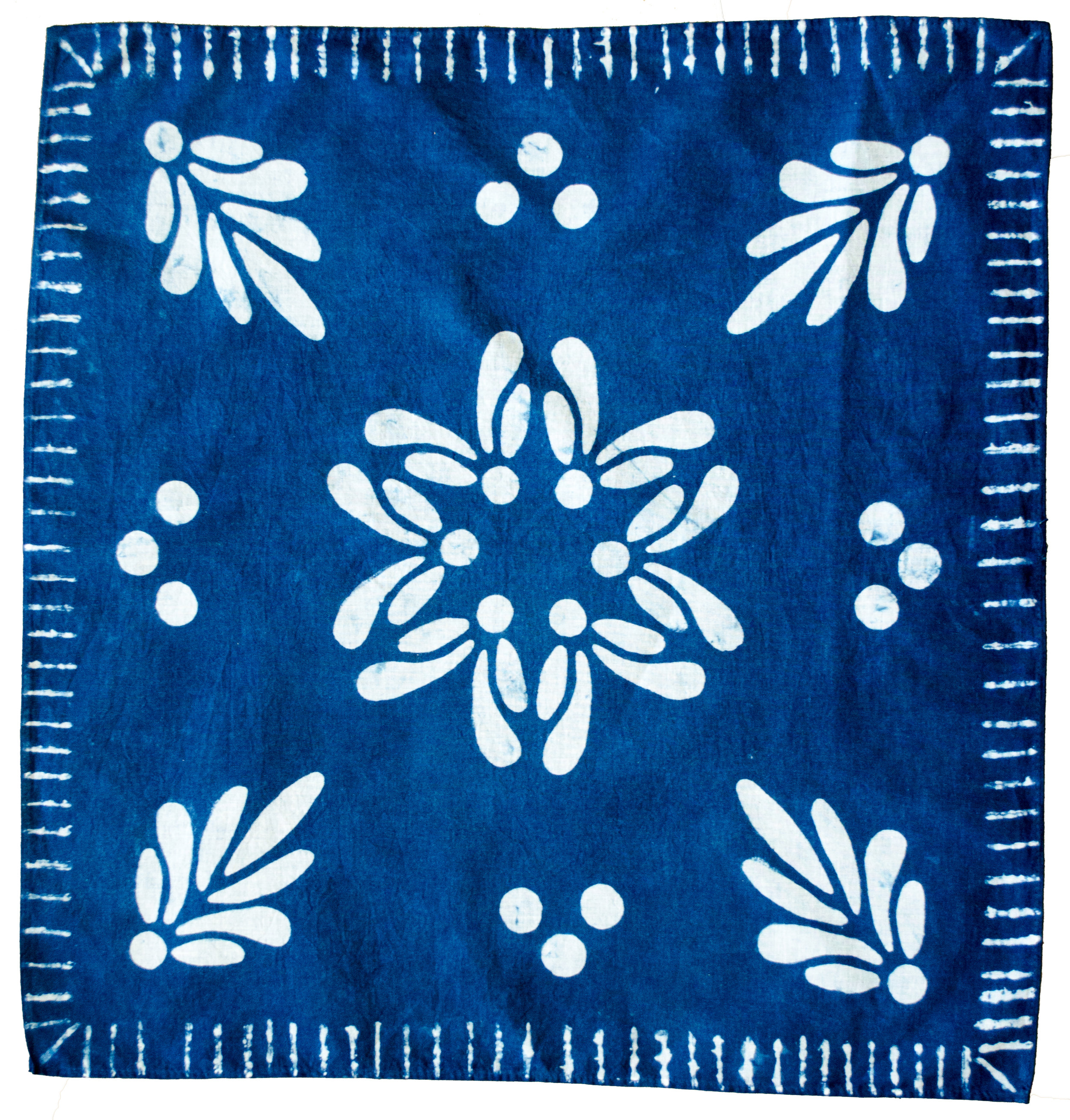
Talavera-Inspired Stencil Katazome Floral Motif Katazome stencil-dyed textile featuring an original hand-cut stencil motif inspired by traditional Talavera tilework. Rice paste resist (nori-zoken) was scraped through the hand-designed stencil onto fabric, forming crisp floral rosettes, corner accents, and dashed border reserves. Following multiple dip immersions and oxidation in a natural indigo vat, the paste was washed away to reveal graphic white reserves set against a rich, deep indigo field. Handcrafted by Carlyn Clark.
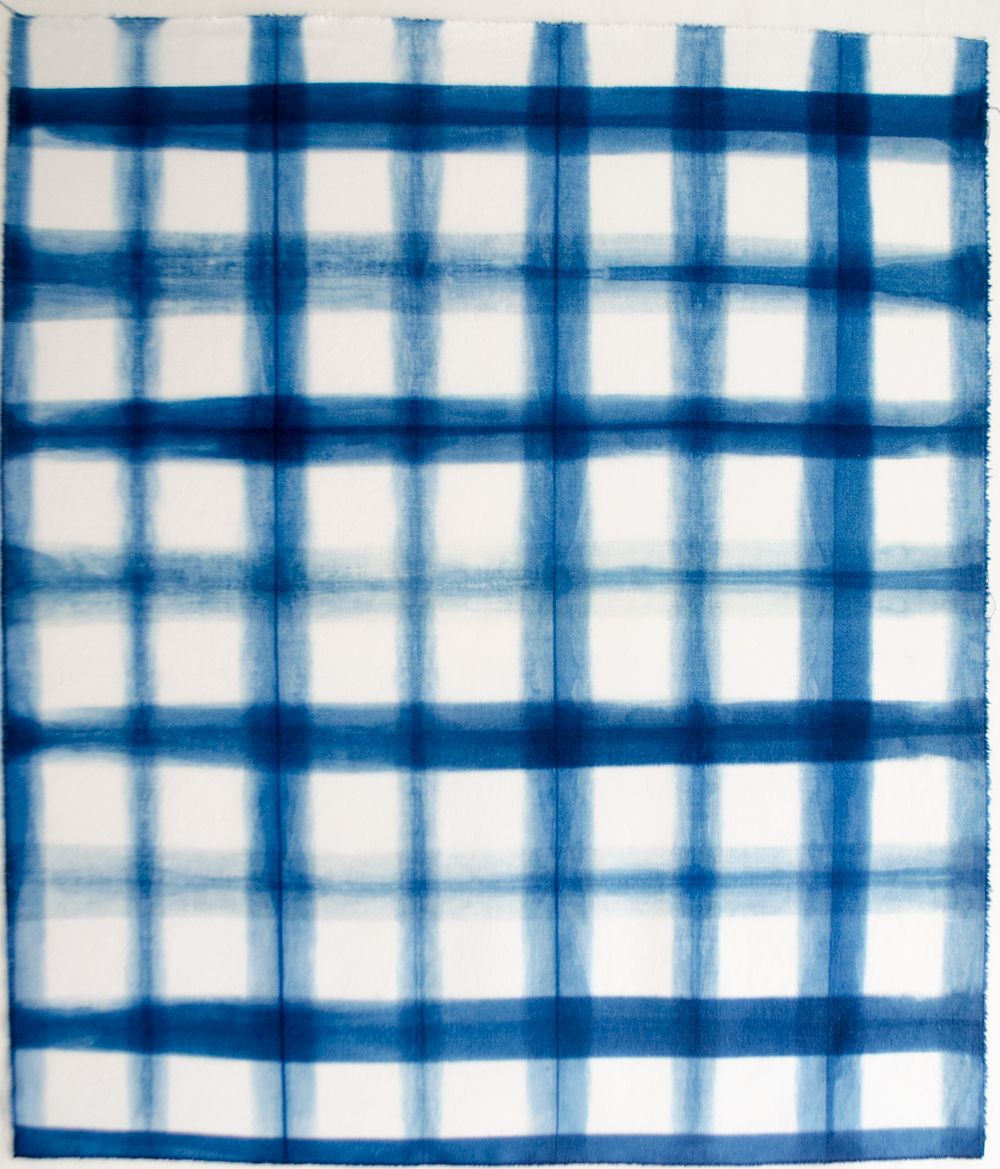
Itajime Shibori Windowpane Grid Motif Orthogonal itajime (shape-clamped) shibori resist technique on woven fabric. The textile was accordion-folded in both horizontal and vertical directions, creating a crisp rectangular grid structure. Wood or acrylic resist plates clamped across the intersections protect the inner white squares, while natural indigo dye penetrates the open edges to form layered, semi-transparent indigo bands and deep blue intersecting lines. Handcrafted by Carlyn Clark.
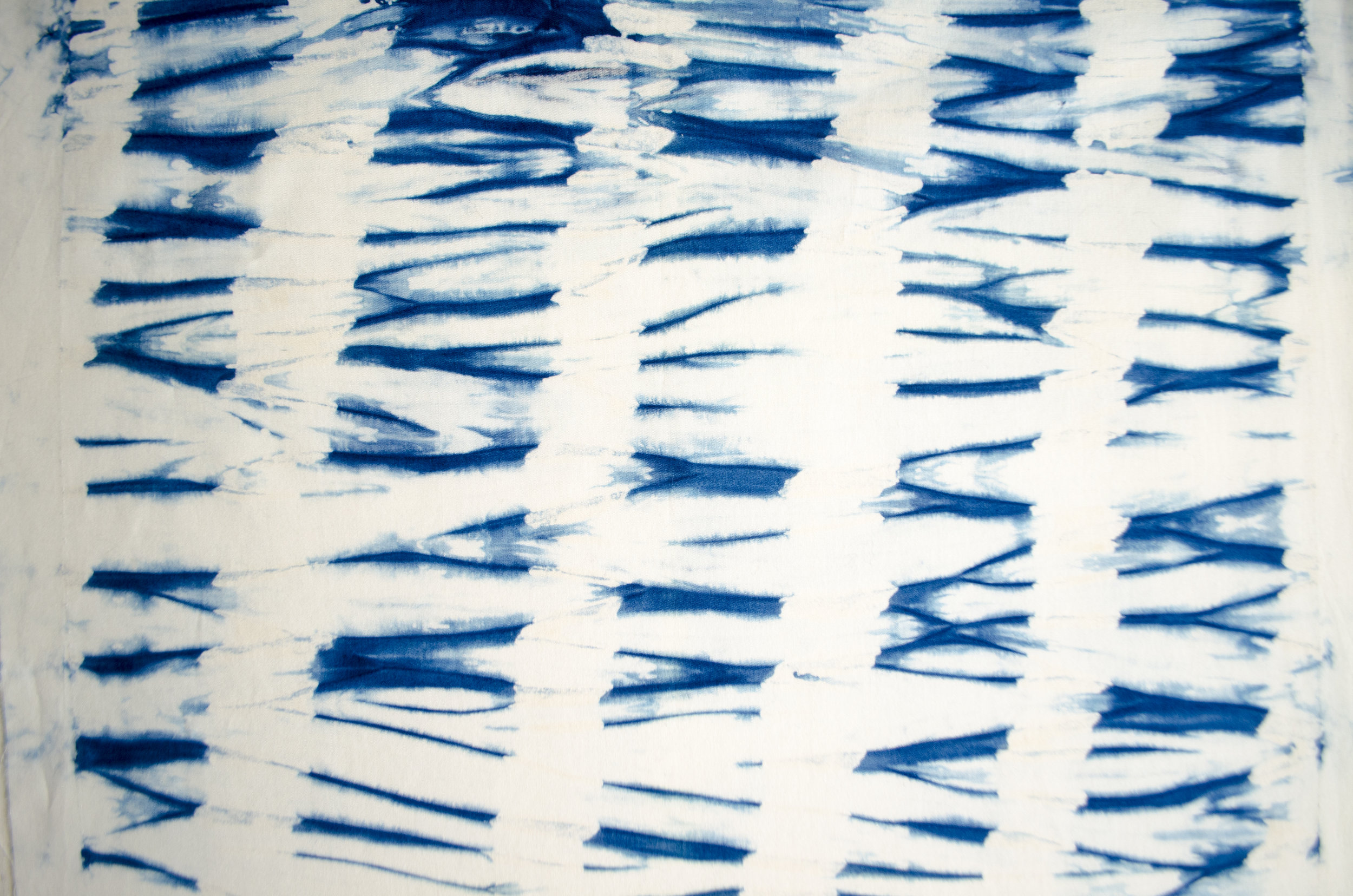
Arashi Shibori & Rice Paste Stripe Hybrid Motif Experimental hybrid resist-dye technique combining arashi (pole-wrapping) and rice paste (nori). The textile was wrapped and scrunched onto a cylinder, after which traditional rice paste resist was applied across the compressed ridges to create strong vertical white reserve stripes. Following immersion in a natural indigo vat and subsequent washing, the piece reveals an intricate combination of rhythmic arashi pleat lines juxtaposed against bold, clean paste-resist bands. Handcrafted by Carlyn Clark.